
A Frustrating Problem That's More Common Than You Think
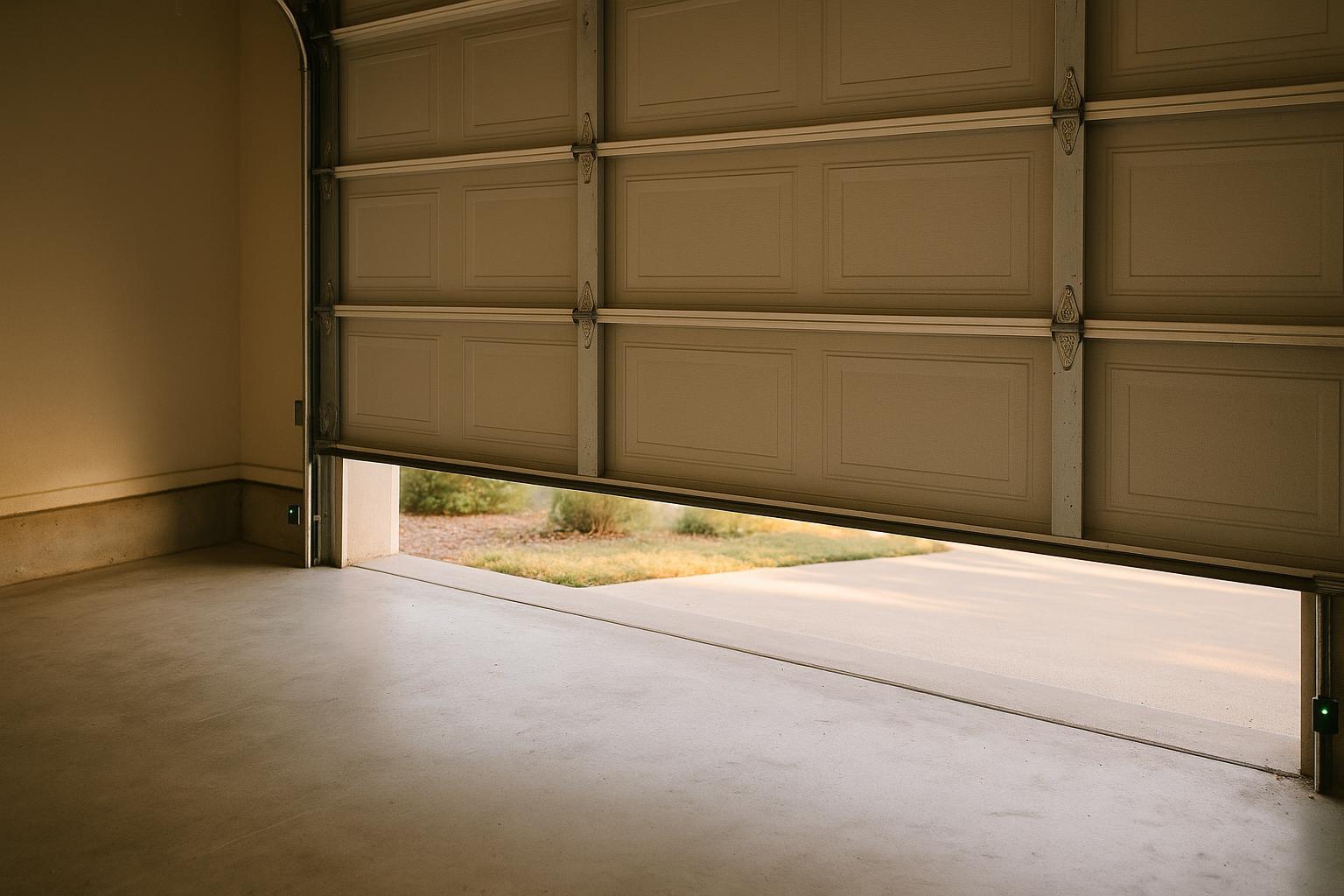
You press the button on your garage door remote, watch the door glide downward, and then — just before it touches the ground — it stops and reverses back up. You try again. Same thing. Maybe it works on the third attempt, maybe it doesn't. If this scenario sounds familiar, you're not alone. This is one of the most common garage door complaints we hear from homeowners across Napa, and the good news is that it's almost always fixable.
Understanding why your garage door reverses before closing completely can save you time, money, and the headache of leaving your garage — and everything inside it — exposed to the elements or security risks. Let's walk through the most likely causes and what you can do about each one.
The Safety Sensors Are Misaligned or Blocked
This is the number one reason garage doors reverse before reaching the floor. Every modern garage door opener manufactured after 1993 is required to have photo-eye safety sensors mounted near the bottom of the door tracks, about six inches off the ground. These sensors send an invisible beam across the opening. If anything breaks that beam while the door is closing, the opener reverses the door to prevent it from crushing a person, pet, or object.
Here's what to check:
- Look for obstructions. A broom, a shoe, a garden hose, or even a pile of leaves can block the sensor beam. Clear the area around both sensors completely.
- Check the alignment. Each sensor has a small LED light. If one or both lights are blinking rather than glowing steadily, the sensors are likely out of alignment. Gently adjust the sensor brackets until both lights are solid.
- Clean the lenses. Dust, cobwebs, and moisture can accumulate on the sensor lenses over time, especially in Napa's warm, dry summers and cool, damp winters. A soft cloth and some glass cleaner can make a big difference.
- Inspect the wiring. Look for frayed, damaged, or disconnected wires running from the sensors to the opener unit. Rodents and general wear can compromise these connections.
The Close-Limit Switch Needs Adjustment
Your garage door opener has a close-limit setting that tells it how far the door should travel before it's considered fully closed. If this setting is off — even slightly — the opener may interpret the door hitting the ground as an obstruction and reverse it as a safety precaution.
On most openers, the close-limit adjustment is a small screw or dial on the back or side of the motor unit. Turning it incrementally allows the door to travel a bit farther before the opener cuts off. However, be cautious with this adjustment. Setting the limit too far can cause the opener to push the door into the ground with excessive force, which can damage the door, the weatherstripping, or the opener itself.
If you're not comfortable making this adjustment, a garage door technician can dial it in quickly during a routine service call.
Worn or Damaged Rollers and Tracks
As your garage door ages, the rollers that guide it along the tracks can wear down, crack, or accumulate debris. Bent or misaligned tracks can also create resistance that the opener interprets as an obstruction, triggering the auto-reverse feature.
Run a visual inspection along both tracks from top to bottom. Look for:
- Dents or bends in the metal tracks
- Rollers that appear cracked, chipped, or frozen in place
- Buildup of dirt, grease, or rust inside the tracks
Lubricating the rollers and tracks with a silicone-based garage door lubricant can resolve minor friction issues. But if you notice significant damage to the tracks or rollers, it's best to call a professional. Attempting to straighten tracks or replace rollers without proper tools and experience can create bigger — and more dangerous — problems.
Spring Tension Issues
Your garage door springs do the heavy lifting, literally. They counterbalance the weight of the door so the opener doesn't have to work as hard. When springs lose tension over time or break entirely, the door becomes much heavier than the opener expects. This added resistance can cause the opener to reverse mid-close.
Signs of spring problems include:
- The door feels unusually heavy when you try to lift it manually
- The door closes too quickly or slams shut
- You hear a loud bang from the garage, which often indicates a spring has snapped
- There's a visible gap in one of the torsion springs above the door
Important safety note: Garage door springs are under extreme tension and can cause serious injury if handled improperly. Spring replacement should always be performed by a trained technician. This is not a DIY project.
The Opener Force Setting Is Too Low
In addition to limit settings, most garage door openers have a force adjustment that controls how much power the motor uses to move the door. If the downward force is set too low, the opener may not have enough power to push the door all the way to the ground, especially if there's even minor friction in the system. The opener reads this resistance as a blockage and reverses.
You can usually increase the down-force setting with a small adjustment on the opener unit. Again, make changes gradually and test after each small adjustment. The goal is to find the minimum force needed to close the door completely without the opener straining or pushing too hard against the floor.
Weather and Seasonal Changes in Napa
Napa's climate can play a role in garage door performance. Temperature fluctuations between hot summer days and cool evenings can cause metal tracks and components to expand and contract. Moisture during the rainy season can lead to rust and corrosion on springs, rollers, and hinges. Even the wooden frames around garage door openings can shift slightly with seasonal humidity changes, affecting how the door sits in its frame.
This is one reason we recommend annual garage door maintenance for homeowners in Napa, American Canyon, Yountville, St. Helena, and the surrounding areas. A yearly tune-up catches small issues before they become expensive repairs and keeps your door operating reliably through every season.
When to Call a Professional
Some of the fixes above — clearing obstructions, cleaning sensors, and light lubrication — are perfectly safe for most homeowners to handle. But if you've tried the basics and your door is still reversing, or if you suspect issues with springs, tracks, or the opener motor itself, it's time to bring in a professional.
At Napa Garage Door Pro, we diagnose and repair reversing issues every week. Our technicians arrive with the tools, parts, and experience to identify the root cause quickly and get your door working properly — usually in a single visit. We also offer emergency service for situations where a malfunctioning door is leaving your home or business unsecured.
Don't Ignore a Reversing Garage Door
A garage door that won't close all the way isn't just an inconvenience. It's a security vulnerability, an energy efficiency problem, and potentially a sign of a bigger mechanical issue developing. The sooner you address it, the less likely it is to turn into a costly repair down the road.
If your garage door is giving you trouble, give us a call. We serve homeowners and businesses throughout Napa and the surrounding wine country communities, and we're always happy to help you get things back on track — literally.