
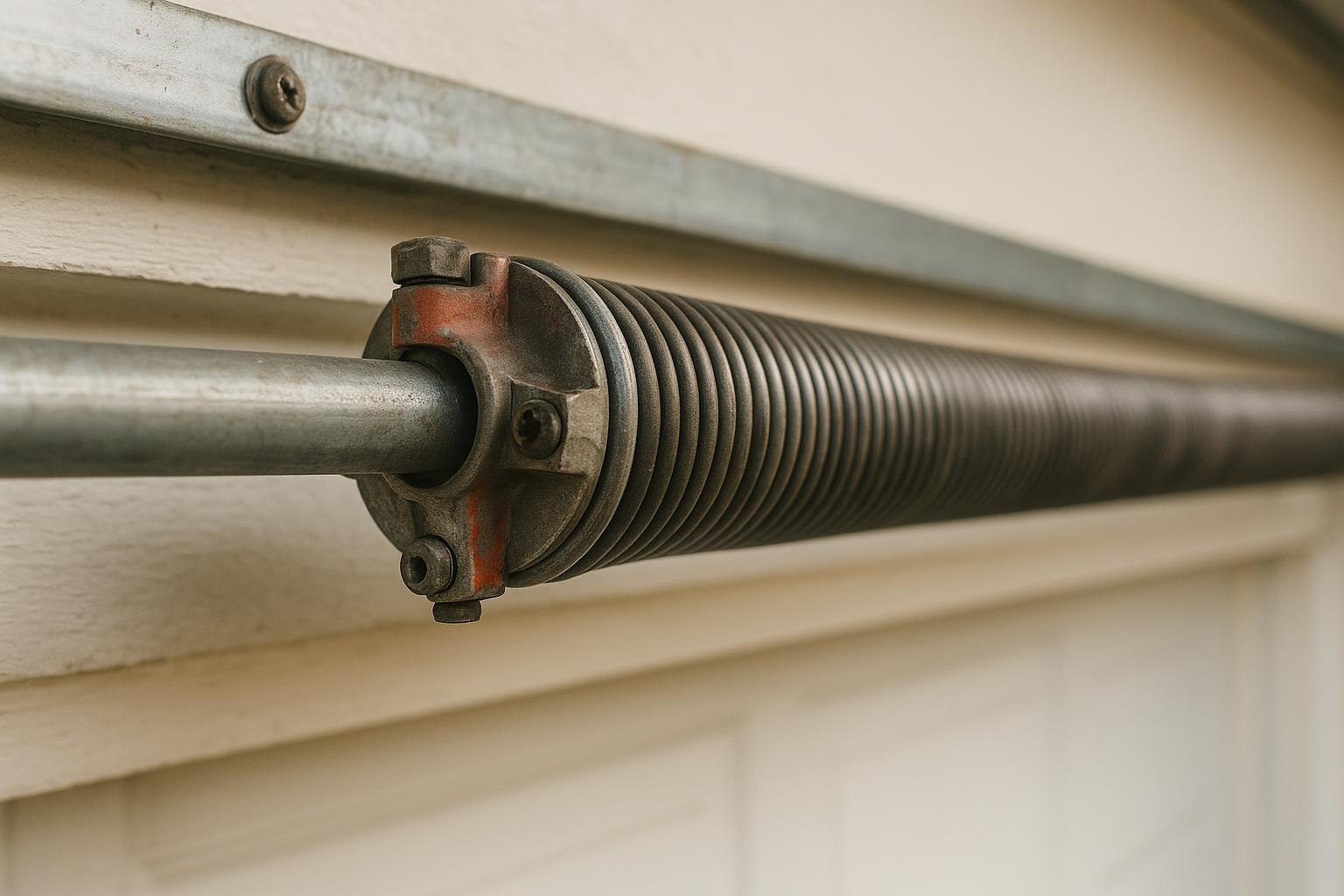
Your Garage Door Springs Are Doing More Work Than You Think
Most homeowners in Napa don't give their garage door springs a second thought — until the morning they press the button and nothing happens. Or worse, they hear a loud bang from the garage that sounds like a gunshot. That's the sound of a spring snapping under tension, and it's more common than you might expect.
Garage door springs are the real workhorses of your entire door system. They counterbalance the weight of the door — which can be anywhere from 130 to over 400 pounds depending on the material and size — so your opener doesn't have to do all the heavy lifting. When those springs wear out or break, your garage door becomes difficult or impossible to operate, and attempting to use it can be genuinely dangerous.
Here's how to recognize the warning signs before a spring failure catches you off guard.
How Garage Door Springs Work
There are two main types of garage door springs used in residential systems:
- Torsion springs — These are mounted on a metal shaft above the door opening. They wind and unwind to raise and lower the door. Most modern homes in Napa use torsion springs because they offer smoother, more controlled operation.
- Extension springs — These run along the horizontal tracks on either side of the door. They stretch and contract as the door moves. Extension springs are more common in older homes and lighter doors.
Both types are under extreme tension, which is why spring replacement is one of those jobs that should always be handled by a trained professional. A spring that releases unexpectedly can cause serious injury or property damage.
7 Warning Signs Your Garage Door Springs Need Replacement
1. The Door Feels Unusually Heavy
Try this simple test: disconnect your garage door opener by pulling the manual release handle, then lift the door by hand. A properly balanced door with healthy springs should feel relatively light and stay open on its own about three to four feet off the ground. If the door feels extremely heavy or slams down the moment you let go, your springs are likely worn out or broken.
2. You Hear a Loud Bang from the Garage
If you heard a sudden, loud noise coming from your garage — especially when no one was in there — a torsion spring probably snapped. The sound is caused by the spring unwinding rapidly and releasing all its stored energy at once. After this happens, you'll likely find that your garage door won't open or is sitting crooked.
3. The Door Opens Only a Few Inches, Then Stops
Modern garage door openers have a safety feature that prevents them from operating when a spring is broken. If your door lifts six inches and then stops, the opener is detecting that the load is too heavy — because the broken spring is no longer helping carry the weight. This is actually your opener protecting itself from burning out its motor.
4. There's a Visible Gap in the Spring
Take a look at the torsion spring above your garage door. When a spring breaks, it separates into two pieces, leaving a visible gap of a few inches. This is one of the easiest signs to spot. If you see a gap, do not attempt to operate the door — call a professional for replacement.
5. The Door Looks Crooked or Uneven
If your garage door appears tilted or lopsided when opening or closing, one of the springs may have broken while the other is still intact. This puts uneven stress on the door, the tracks, and the opener. Continuing to use the door in this condition can cause additional damage to other components and lead to a more expensive repair.
6. The Cables Are Loose or Hanging
The lift cables on your garage door are connected to the springs. When a spring breaks, the cables can lose tension and appear loose, hanging down, or even unwound from their drums. Loose cables are a clear indicator of a spring problem and another reason to stop using the door immediately.
7. Your Springs Are More Than 7-10 Years Old
Most standard garage door springs are rated for approximately 10,000 cycles — one cycle being one full open and close. For the average Napa household that opens and closes the garage door four times a day, that works out to roughly seven to ten years of use. If your springs are approaching or past that age, they're living on borrowed time even if they haven't shown obvious signs of wear yet.
Can You Replace Garage Door Springs Yourself?
We strongly advise against it. Garage door spring replacement is consistently ranked among the most dangerous DIY home repairs. Torsion springs, in particular, store an enormous amount of energy. Without the proper tools, winding bars, and training, attempting to remove or install these springs can result in severe injuries.
Every year, emergency rooms across the country treat homeowners who tried to save a few dollars by tackling spring replacement on their own. The cost of professional spring replacement is modest compared to a hospital visit — and a trained technician can typically complete the job in under an hour.
What to Expect During Professional Spring Replacement
When you call a garage door professional for spring replacement, here's what the process generally looks like:
- Inspection — The technician will assess the type, size, and condition of your current springs and check for any related damage to cables, drums, or the opener.
- Spring removal — Using specialized tools, the technician safely unwinds and removes the broken or worn springs.
- Installation — New springs are installed and wound to the correct tension for your specific door weight and size.
- Balancing and testing — The door is balanced, the safety features are tested, and all hardware is inspected to make sure everything operates smoothly.
Many professionals, including our team at Napa Garage Door Pro, recommend replacing both springs at the same time — even if only one has broken. Since both springs were installed together and have the same number of cycles on them, the second one is likely close behind. Replacing both saves you from paying for a second service call a few months down the road.
Extending the Life of Your Garage Door Springs
While springs will eventually wear out no matter what, you can help them last longer with a few simple habits:
- Lubricate the springs twice a year with a silicone-based garage door lubricant. This reduces friction and helps prevent rust, which is especially important in Napa where morning fog and seasonal moisture are a regular occurrence.
- Keep the door balanced. An unbalanced door puts extra strain on the springs. If you notice the door drifting up or down when left halfway open, it's time for a professional adjustment.
- Invest in high-cycle springs. When it's time for replacement, ask about high-cycle or extended-life springs. These are rated for 25,000 to 50,000 cycles and cost only slightly more than standard springs, but they can last two to five times longer.
Don't Wait for a Complete Failure
A broken garage door spring is more than an inconvenience — it can leave your car trapped in the garage, compromise your home's security, and create a safety hazard for your family. If you've noticed any of the warning signs above, it's worth getting your springs inspected sooner rather than later.
At Napa Garage Door Pro, we provide fast, professional spring replacement for homeowners throughout Napa, American Canyon, Yountville, St. Helena, and the surrounding areas. We carry a full inventory of springs on our trucks so most repairs are completed in a single visit. If your garage door isn't acting right, give us a call — we'll get it sorted out quickly and safely.