
Your Garage Door Works Hard — Is Anyone Looking After It?
Think about how many times your garage door opens and closes each day. If you're like most families in Napa, it's at least four times — morning departures, afternoon returns, taking the kids to school, heading out to dinner in Yountville. That adds up to roughly 1,500 cycles per year. Your garage door is the largest moving component in your home, and it takes a beating from daily use, temperature swings, and the occasional Napa Valley rain.
Yet most homeowners never schedule garage door maintenance. They wait until a spring snaps at 7 a.m. on a Monday, or the opener grinds to a halt on a Friday evening. The good news? A little preventive care goes a long way toward avoiding those emergency situations — and it can save you hundreds of dollars in the long run.
So How Often Should You Service Your Garage Door?
The short answer: at least once a year. For most residential garage doors in the Napa area, an annual professional tune-up combined with a few simple DIY checks every few months is enough to keep things running safely and smoothly.
However, there are situations where more frequent service makes sense:
- Heavy daily use: If your garage door cycles six or more times per day — common for busy households or home-based businesses — consider scheduling maintenance every six months.
- Older doors: Garage doors that are 10 years or older tend to develop issues more frequently. Components wear out, weather seals deteriorate, and hardware loosens over time.
- Coastal or high-moisture environments: While Napa isn't on the coast, our valley does experience morning fog and seasonal humidity that can accelerate rust and corrosion on metal parts.
- After severe weather: High winds, heavy rain, or extreme heat waves can all affect your garage door's alignment and hardware. A quick inspection after major weather events is always a smart idea.
What Does a Professional Garage Door Tune-Up Include?
A proper maintenance visit isn't just someone glancing at your door and calling it a day. Here's what a thorough garage door service appointment should cover:
1. Spring Inspection and Adjustment
Your garage door springs — whether torsion or extension — bear the full weight of the door. A technician will inspect them for signs of wear, rust, or fatigue and adjust the tension if needed. Springs under high tension are dangerous to work with, so this is one task you should always leave to a professional.
2. Cable and Hardware Check
Lift cables, pulleys, brackets, and hinges all need to be inspected for fraying, cracking, or loosening. Even a small issue with a cable can lead to the door falling or operating unevenly.
3. Roller and Track Inspection
Worn rollers create noise and friction. Bent or misaligned tracks can cause the door to stick, jam, or go off-track entirely. During a tune-up, a technician will clean the tracks and check that the rollers are in good condition.
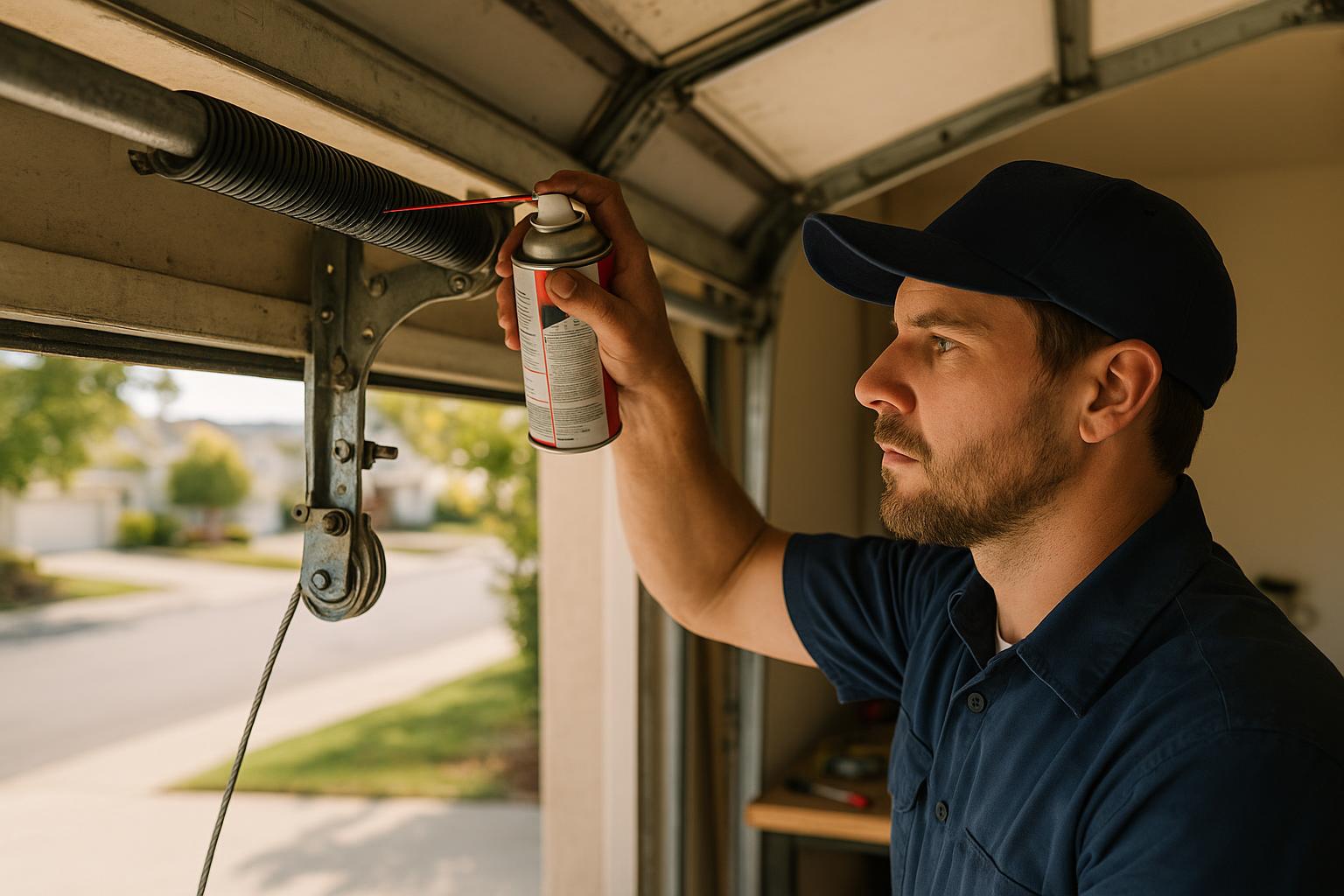
4. Lubrication
Moving parts need proper lubrication to reduce friction, minimize noise, and prevent premature wear. This includes the springs, rollers, hinges, and bearing plates. A technician will use a garage-door-specific lubricant — not WD-40, which can actually attract dust and grime over time.
5. Opener Testing and Safety Checks
Your garage door opener's auto-reverse feature is a critical safety mechanism. A technician will test the photo-eye sensors and the mechanical auto-reverse to make sure the door stops and reverses when it encounters an obstruction. This is especially important for families with children and pets.
6. Weatherstripping and Seal Inspection
The rubber seal along the bottom of your door and the weatherstripping around the frame keep out rain, dust, pests, and drafts. Over time, these seals crack and deteriorate. Replacing them is inexpensive and makes a noticeable difference in keeping your garage clean and energy-efficient.
7. Balance Test
A properly balanced garage door should stay in place when you manually lift it halfway and let go. If it slides up or drops down, the springs may need adjustment. An unbalanced door puts extra strain on the opener and shortens its lifespan.
Simple Maintenance You Can Do Yourself
Between professional service visits, there are a few things you can do every few months to keep your garage door in good shape:
- Visual inspection: Look at the springs, cables, rollers, and hardware for obvious signs of wear or damage. Don't touch the springs — just look.
- Listen for changes: A garage door that suddenly sounds louder, squeakier, or grindier is telling you something. New noises often signal a component that needs attention.
- Test the balance: Disconnect the opener and manually lift the door halfway. If it doesn't hold its position, call a professional to adjust the springs.
- Clean the tracks: Wipe down the inside of the tracks with a damp cloth to remove dirt and debris. Don't use lubricant on the tracks — it can cause the rollers to slide instead of rolling properly.
- Test the safety features: Place a roll of paper towels in the door's path and press the close button. The door should reverse when it contacts the object. Also check that the photo-eye sensors are aligned and clean.
What Happens When You Skip Maintenance?
Neglecting your garage door doesn't just lead to inconvenience — it can lead to expensive repairs and safety hazards. Here's what we commonly see when homeowners in Napa and surrounding areas like American Canyon, St. Helena, and Calistoga go years without servicing their doors:
- Broken springs: Springs that aren't inspected regularly can snap without warning, leaving your door inoperable and potentially causing injury or property damage.
- Premature opener failure: An unbalanced door forces the opener to work harder than it should, burning out the motor years ahead of schedule.
- Off-track doors: Worn rollers and dirty tracks increase the chances of the door jumping off its tracks — a situation that requires immediate professional repair.
- Higher energy bills: Deteriorated seals and weatherstripping let conditioned air escape and outside air in, making your HVAC system work harder.
- Security vulnerabilities: A garage door that doesn't close properly or has a malfunctioning lock is an invitation for trouble.
When to Call a Professional in Napa
While basic visual checks and cleaning are perfectly safe for homeowners, anything involving springs, cables, or opener electrical components should be handled by a trained technician. These parts are under extreme tension or carry electrical current, and improper handling can result in serious injury.
If it's been more than a year since your last professional service — or if you can't remember the last time anyone looked at your garage door — it's time to schedule a tune-up. Catching small problems early is always cheaper and less stressful than dealing with a full breakdown.
Keep Your Garage Door Running Year-Round
Your garage door is one of those things that's easy to take for granted until it stops working. A simple annual maintenance visit can extend the life of your door and opener by years, keep your family safe, and save you from unexpected repair bills. Whether you're in Napa, Sonoma, or anywhere in the surrounding wine country, investing a little time and attention in your garage door pays off every single day you pull into your driveway without a problem.
At Napa Garage Door Pro, we offer comprehensive maintenance services designed to catch issues before they become emergencies. If your garage door is due for a checkup, give us a call — we'll make sure everything is running the way it should.